Hernia consultation
Focused assessment of symptoms, examination findings, medical risk, patient goals, and repair options.
Services
The service model can support local referrals, second opinions, interprovincial assessment, and private-pay care pathways.
Focused assessment of symptoms, examination findings, medical risk, patient goals, and repair options.
Review of operative notes, imaging, recurrence history, mesh history, wound events, stoma status, and abdominal wall anatomy.
Planning for appropriate operative approach, risk optimization, anticipated recovery, and follow-up requirements.
Structured preparation before surgery, including weight loss support, smoking and nicotine cessation, nutrition, conditioning, and medical optimization.
Guidance on required records, imaging, and referral details so patients arrive with the right information.
Follow-up planning that can be coordinated with local providers for patients traveling from outside the region.
Clear next steps for patients seeking expedited specialist assessment or interprovincial access where appropriate.

Robotic & minimally invasive repair
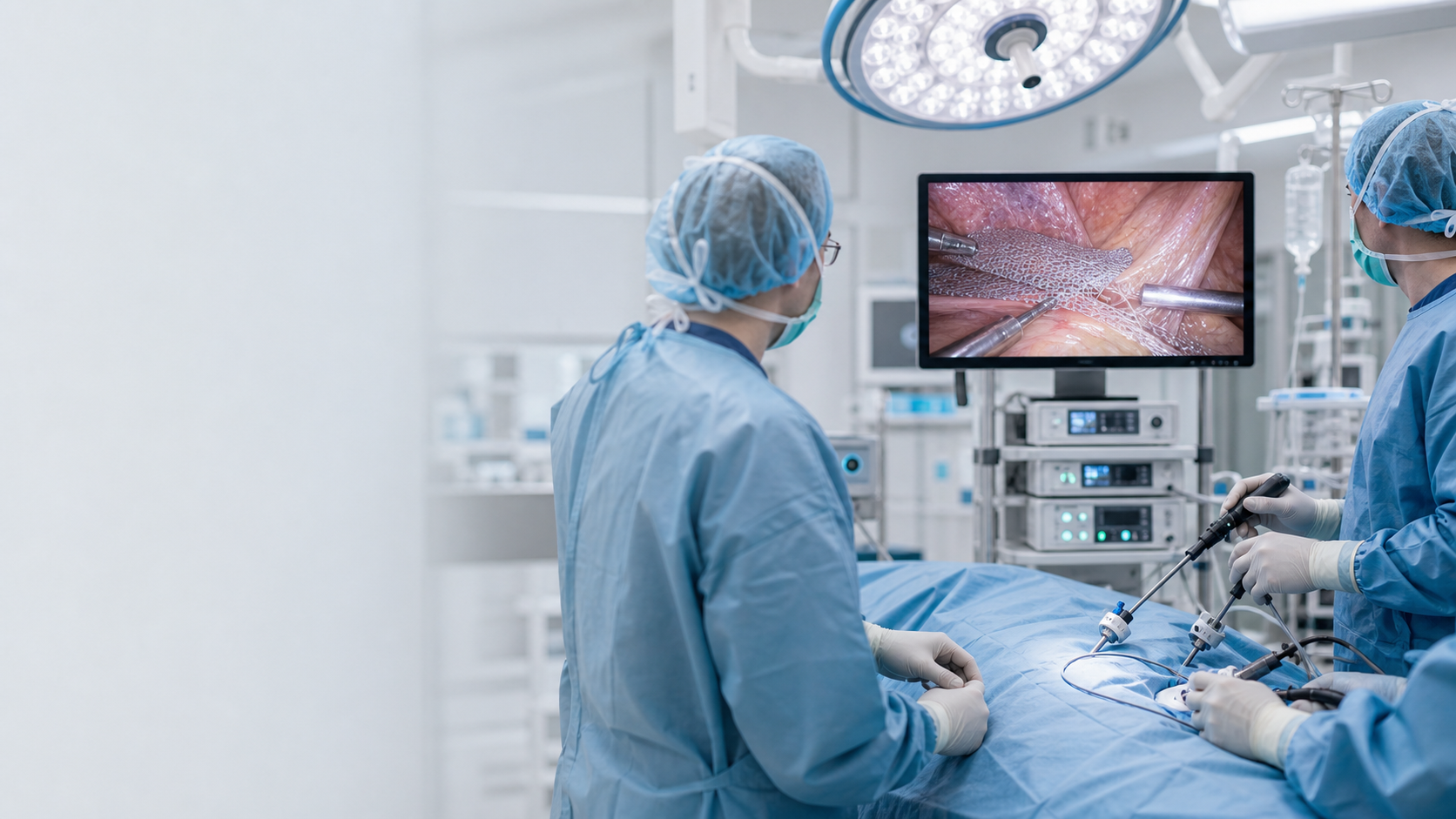
Many hernia repairs can now be performed with robotic-assisted and laparoscopic techniques. Working through small incisions, the surgeon operates with magnified 3D visualization and fully articulating instruments, allowing precise dissection and suturing deep within the abdominal wall.
For appropriate patients, this can mean less post-operative pain, shorter hospital stays, fewer wound complications, and a faster return to normal activity. The approach is always matched to the patient — some complex reconstructions are still best served by open techniques, and the clinic offers the full spectrum.
Keyhole access avoids large abdominal incisions, which can reduce post-operative pain, wound complications, and recovery time.
Magnified, high-definition 3D views and wristed instrumentation support meticulous repair of the abdominal wall, including complex and recurrent defects.
Candidacy for a robotic or laparoscopic approach is decided case by case, based on anatomy, hernia history, prior repairs, and overall health.
Prehabilitation
For many abdominal wall problems, the safest operation is the one performed after risks have been understood and improved where possible. Prehabilitation can help patients arrive at surgery stronger, better nourished, and better prepared for recovery.
Ask about preparationWeight loss planning may reduce wound risk, recurrence risk, and strain on the reconstruction, especially for larger or recurrent hernias.
Stopping cigarettes, vaping, and nicotine products can improve wound healing and reduce pulmonary and infectious complications.
Protein intake, micronutrient status, and overall nutrition are especially important for patients with wounds, fistulas, or major planned reconstruction.
Improving blood sugar control may lower infection risk and support better healing after abdominal wall surgery.
Gentle conditioning, walking tolerance, breathing exercises, and functional movement can support recovery after surgery.
Blood thinners, immunosuppression, steroids, pain medications, and other medical issues may need coordinated planning before surgery.
Active wounds, skin irritation, infection risk, or stoma appliance challenges may need attention before repair is considered.
Sleep apnea, lung disease, and breathing reserve can affect surgical risk and recovery, particularly after larger abdominal wall operations.